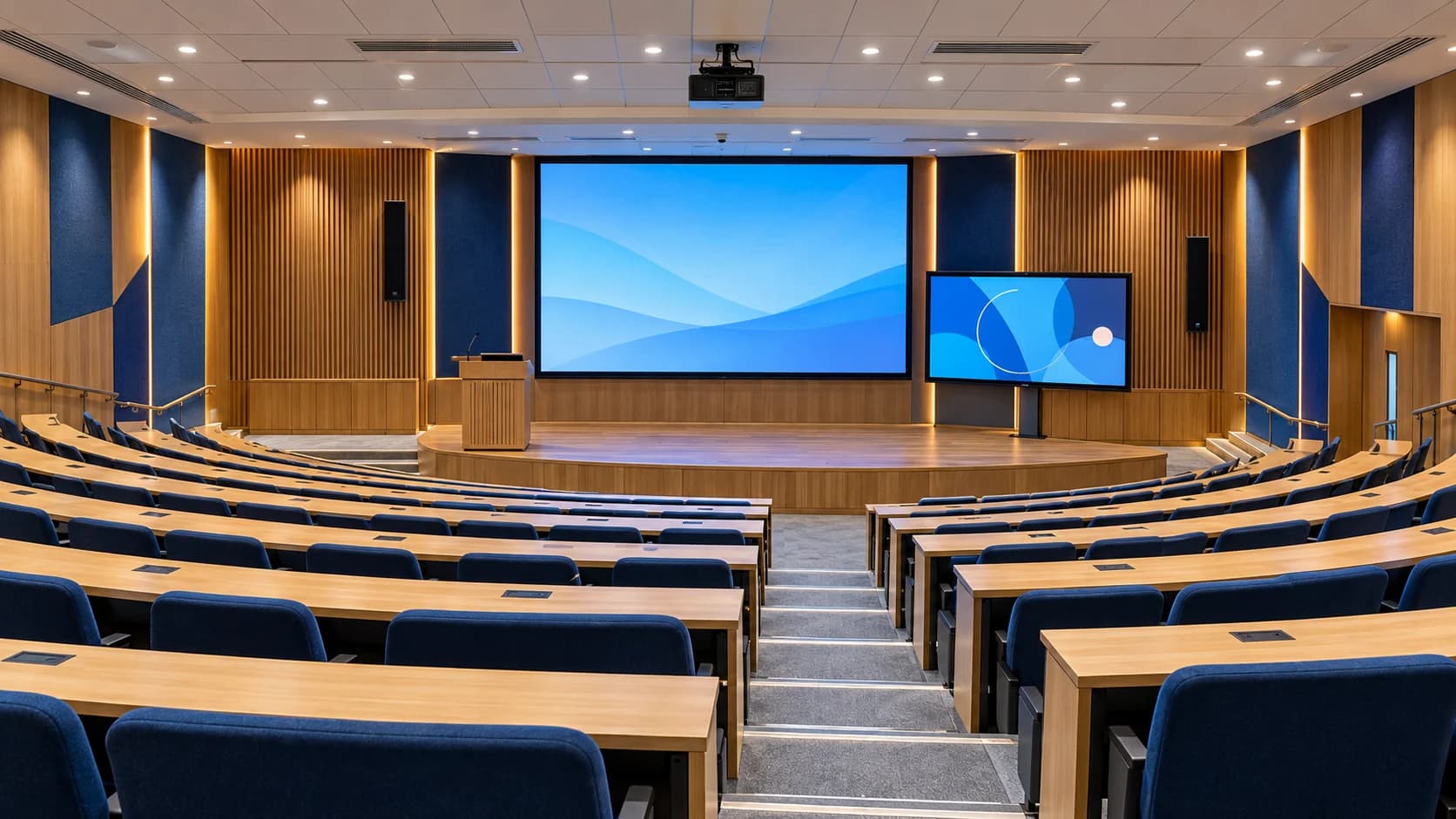
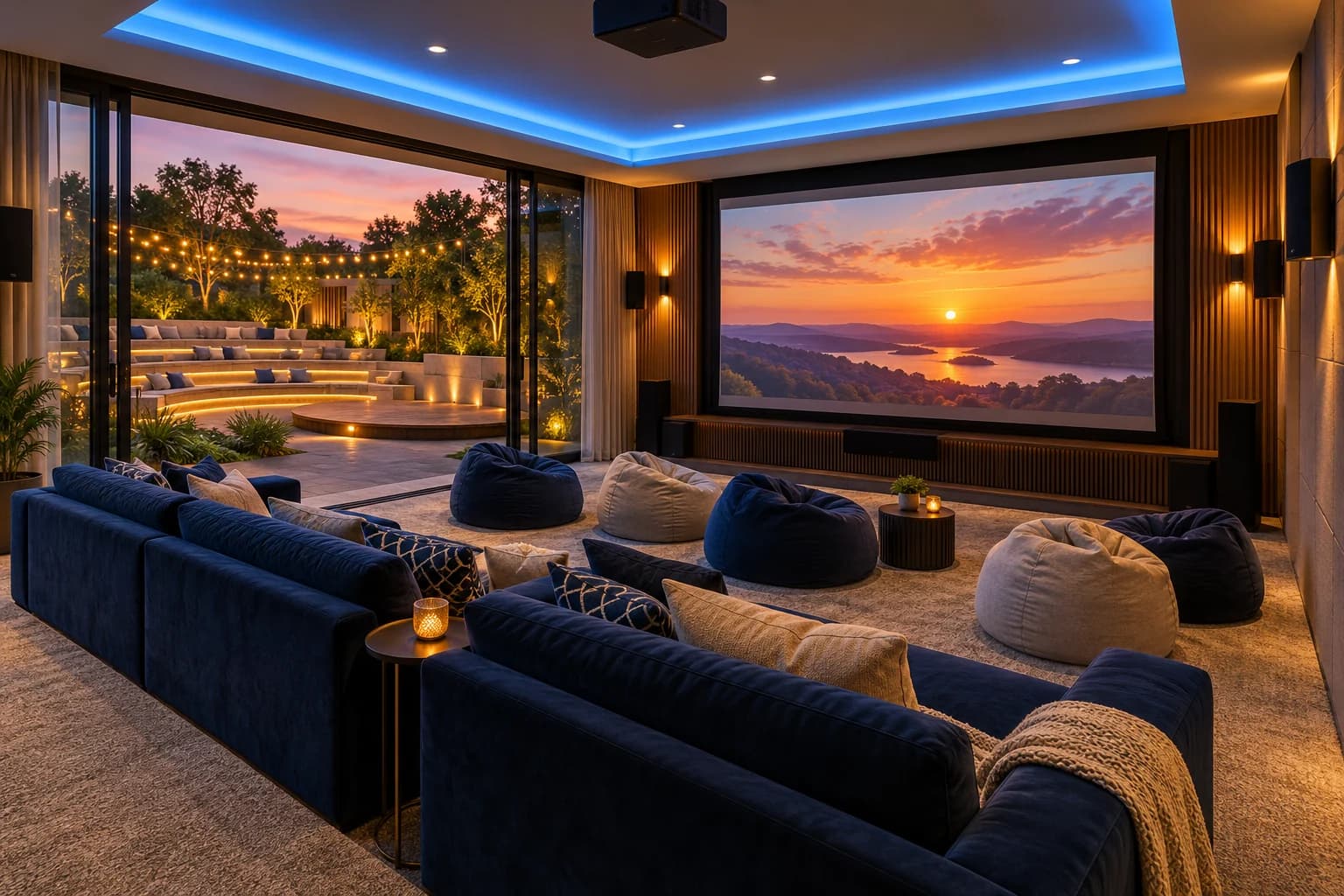
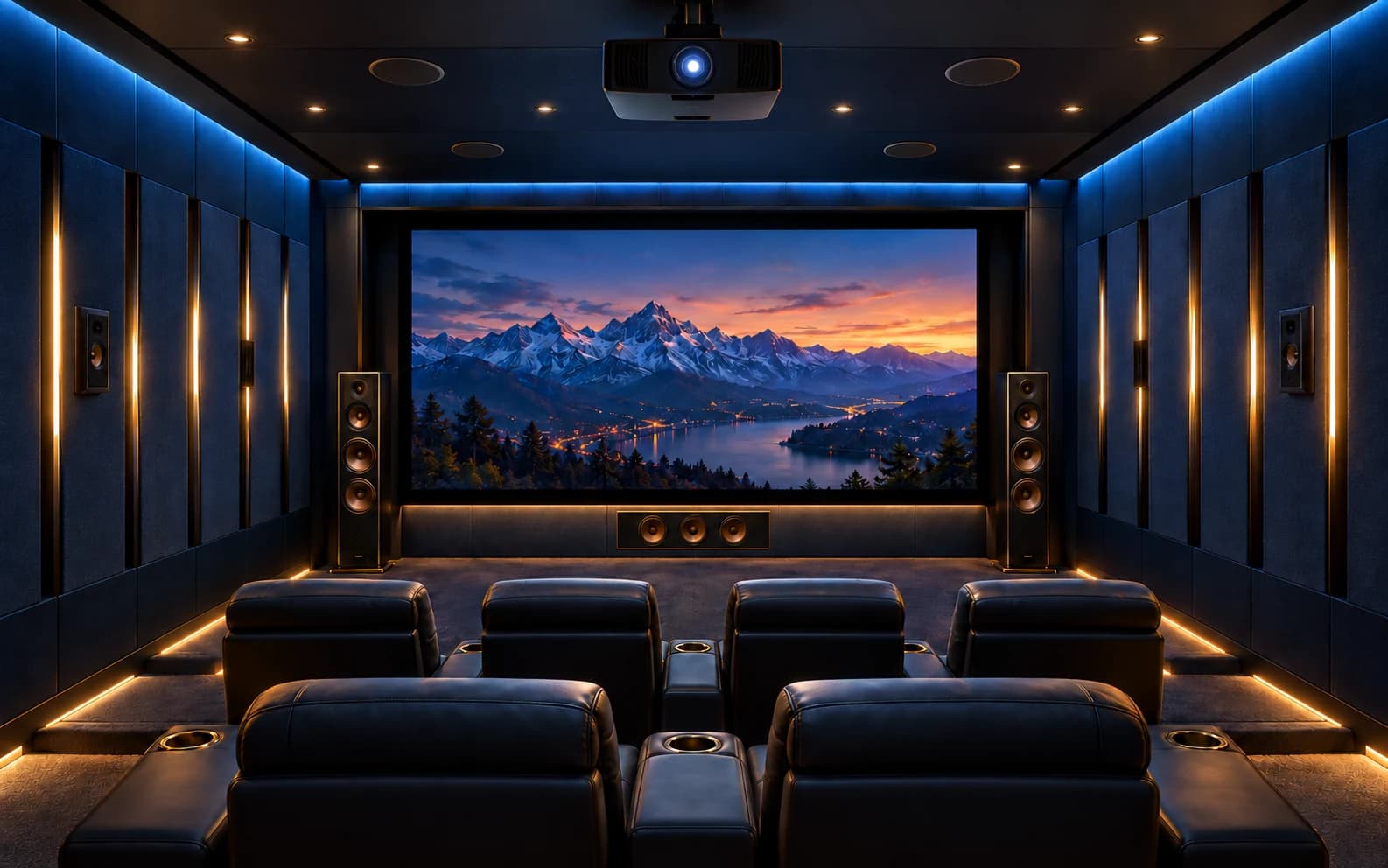
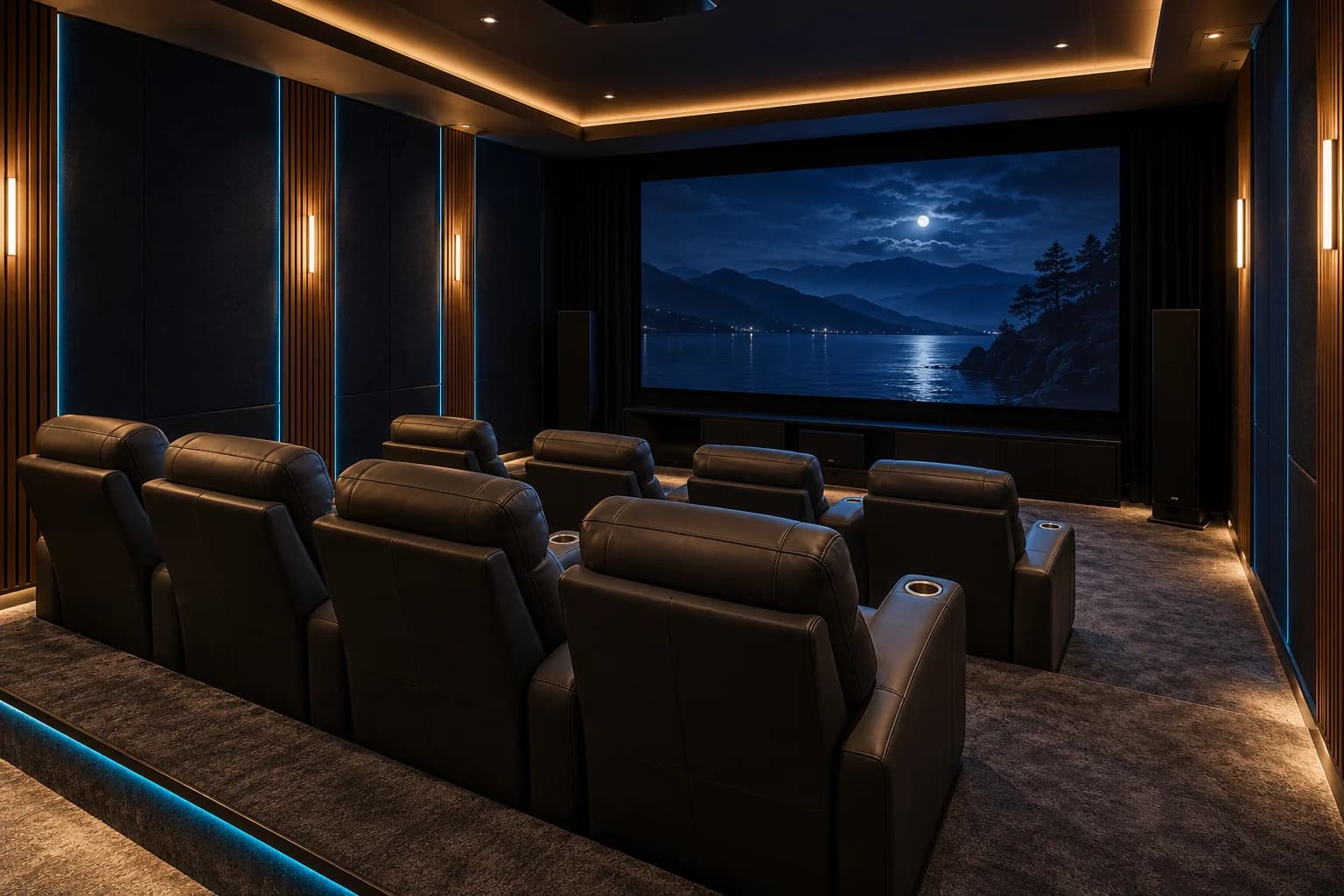
- Projector
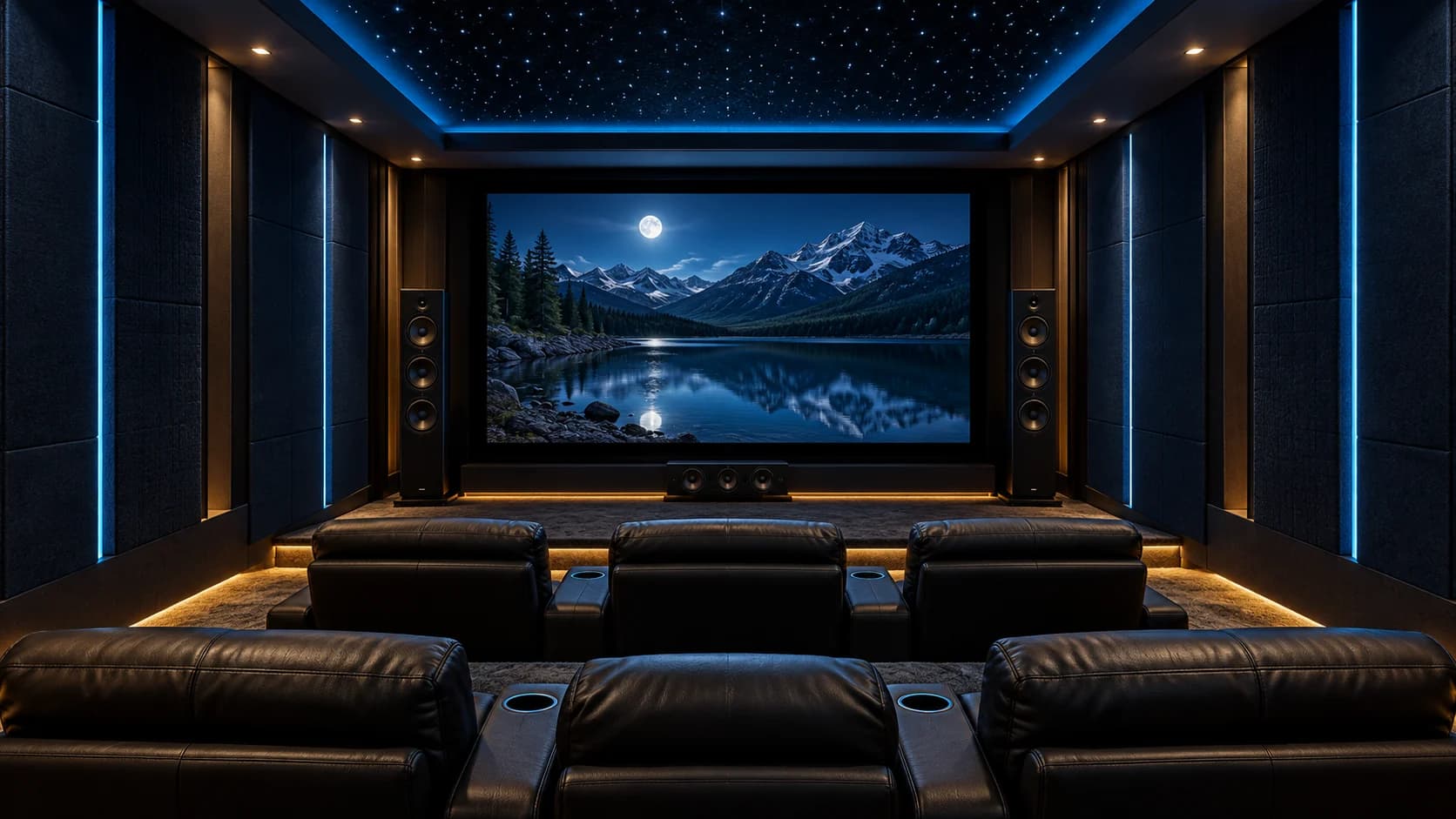
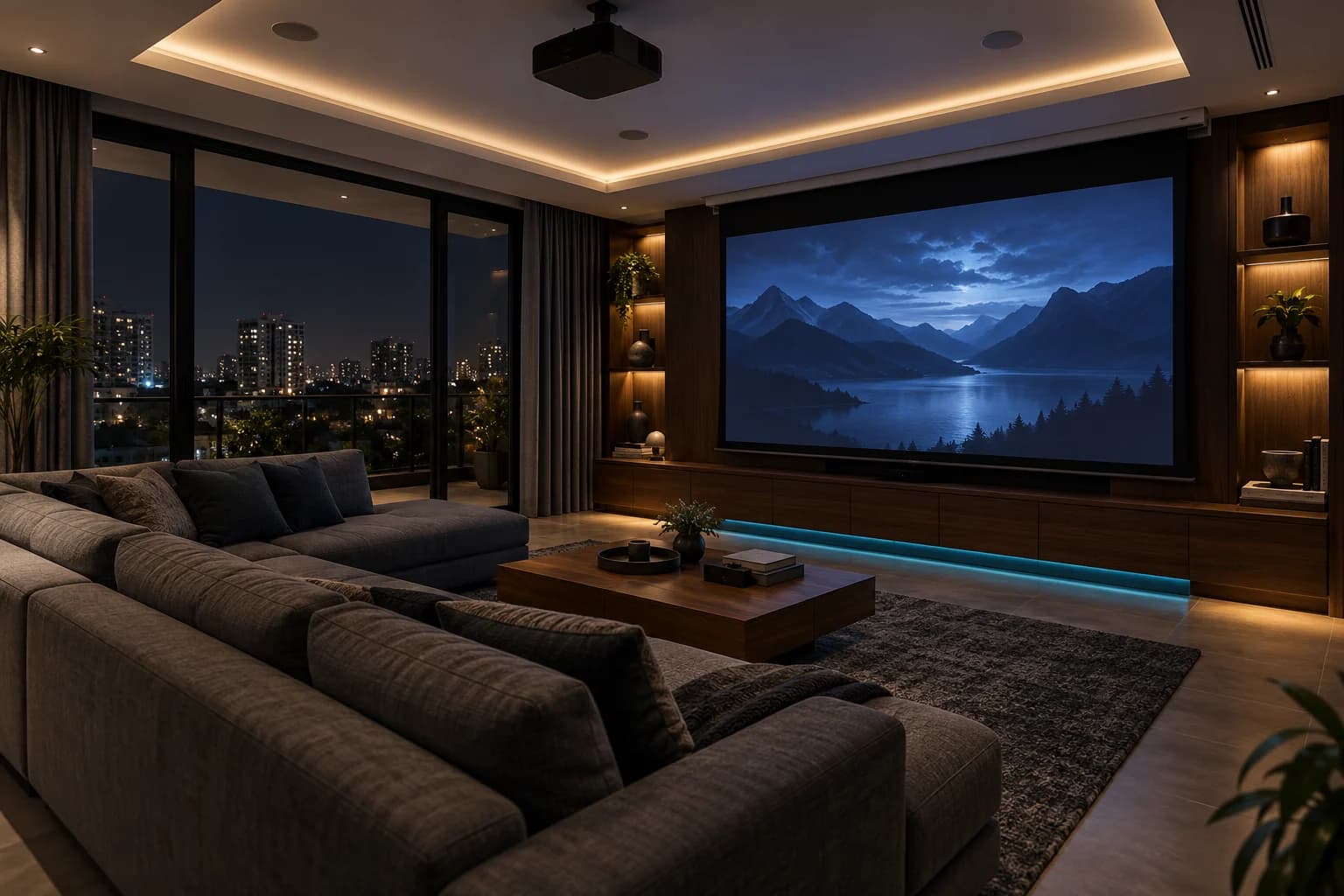
- Usually ceiling-mounted behind the seating, positioned for the screen size and the projector's throw range. Placement is planned early, because it determines cabling, ventilation and how large and bright the image can be.
- Projection screen
- Sized from your seating distance, with a surface chosen for the room's light. Acoustically transparent screens can hide speakers behind them. The right size feels immersive without making you turn your head; the right material protects contrast.
- Front speakers
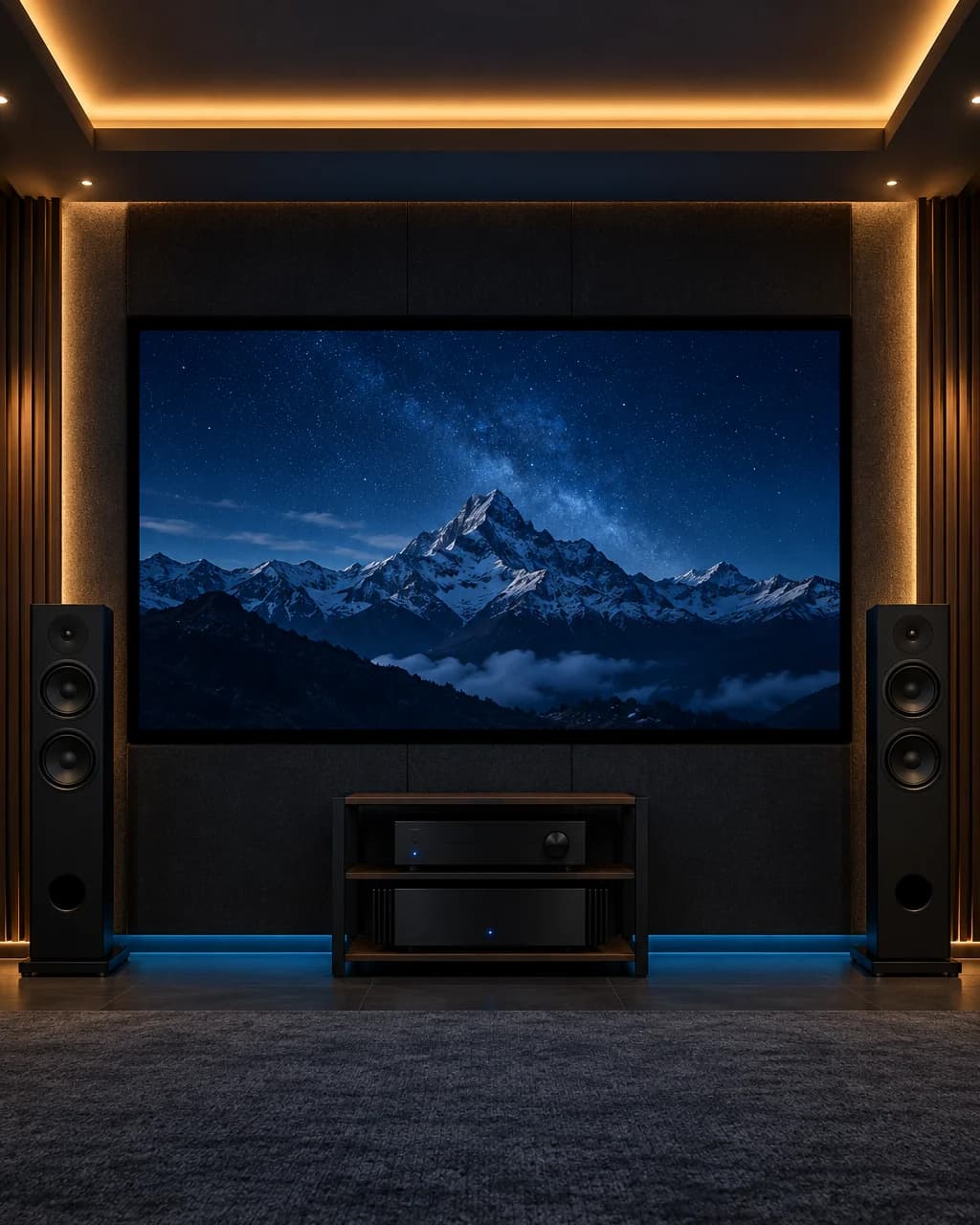
- Left, centre and right channels carry most of the dialogue, music and on-screen action. Matched front speakers at ear height keep voices anchored to the picture.
- Surround speakers
- Placed to the sides (and often behind) the seating to create the sense of a space around you. Good surround placement makes effects move smoothly instead of jumping from speaker to speaker.
- Ceiling speakers
- In-ceiling or high-wall speakers add height to formats that support it, such as rain, aircraft or ambience above you. Where the ceiling allows, height channels make a room feel larger than it is.
- Acoustic panels
- Fabric-wrapped absorption and diffusion control reflections, echo and, with the right design, some low-frequency issues. Treatment often improves clarity more than a speaker upgrade — and can look like fine wall panelling.
- Ambient lighting
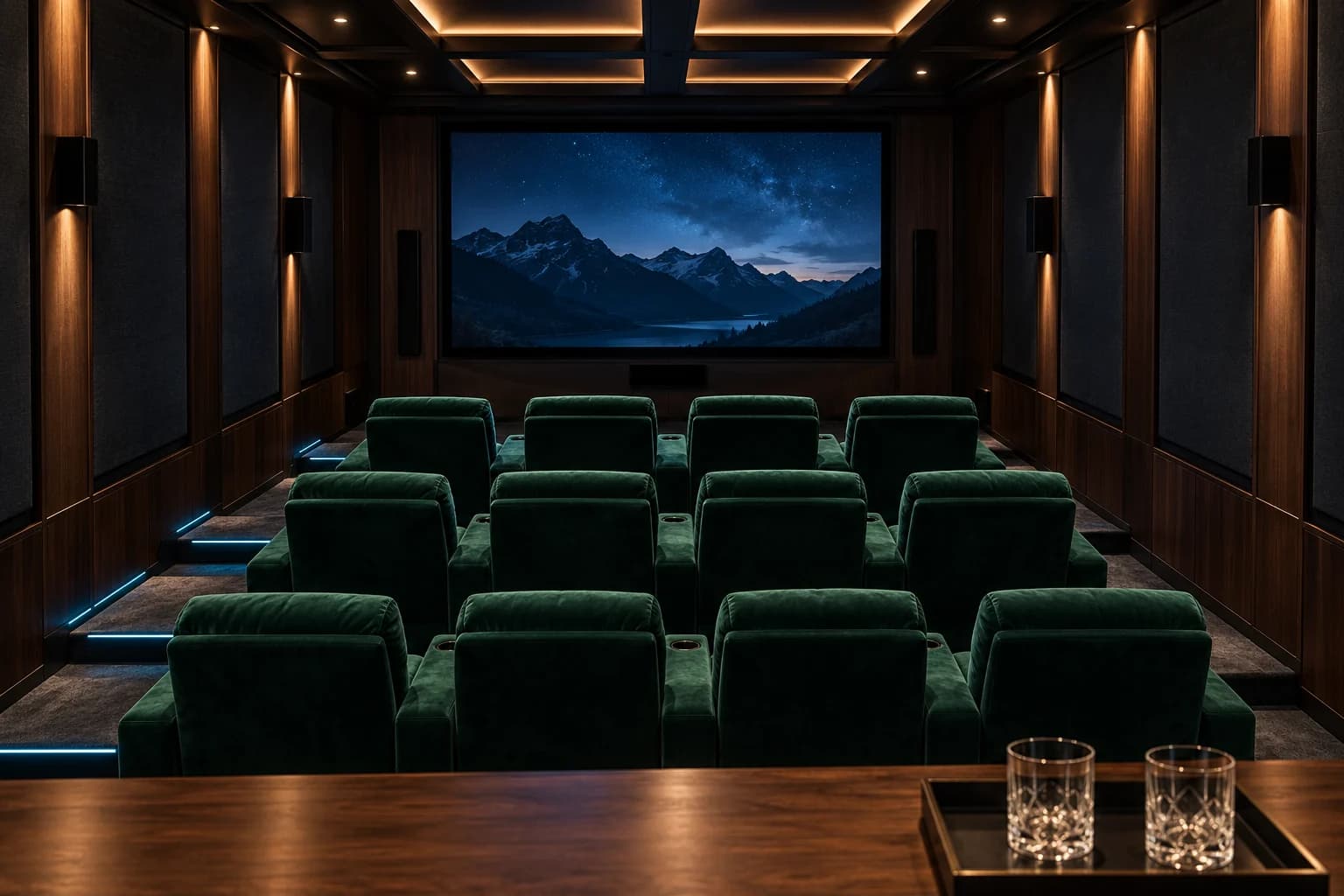
- Layered, dimmable wall, step and ceiling lights, grouped into scenes such as Welcome, Showtime and Intermission. Low-level step lights keep the room safe in the dark without washing out the picture.
- Recliner seating
- Rows are spaced for comfort and sightlines; a riser lifts rear rows so every seat sees the full screen. Seating distance links picture size and sound placement — it is designed first, not last.